_PNG.png)
When is a Neuropsychological Evaluation Needed?

Dr. Karolina Nicewicz, Neuropsychologist | MindWell Neuropsychology
As a licensed psychologist and pediatric neuropsychologist, one of the most common questions I hear from parents, teens, and young adults is:
“How do I know if a neuropsychological evaluation is actually needed?”
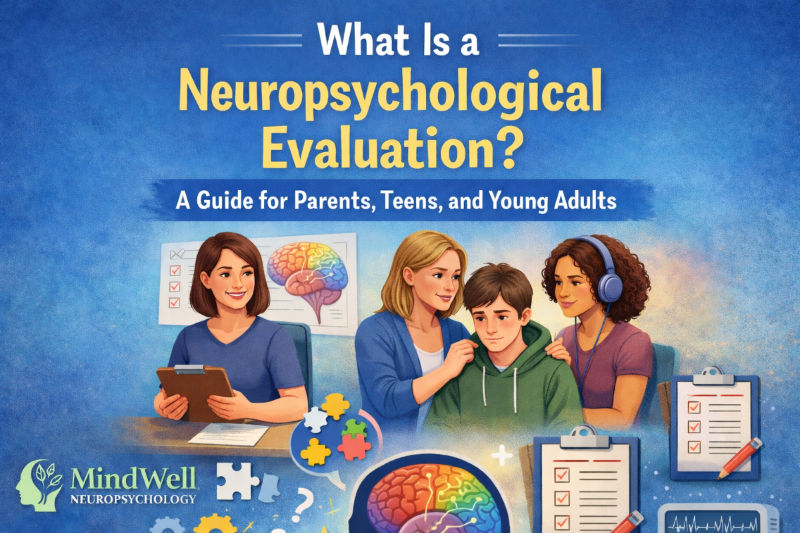
A neuropsychological evaluation, sometimes called neuropsychological testing, is designed to help understand how the brain is functioning in real life. Families often reach out when something doesn’t feel right, even if grades are acceptable or supports are already in place.
If you’re asking this question, you’re not alone and it’s often the right time to seek clarity. If you’re new to neuropsychological evaluations, you may find it helpful to start with our overview of what a neuropsychological evaluation is and how it works. (Link to Post 1)
When effort and outcome don’t match
I often recommend a neuropsychological assessment when a child, teen, or young adult is putting in significant effort but still struggling.
This may include:
Academic difficulties despite tutoring or extra support
Attention, focus, or executive functioning challenges
Memory, organization, or processing speed concerns
Emotional regulation difficulties, anxiety, or mood changes
Behavioral challenges at school or at home
When these concerns are persistent rather than situational, a comprehensive evaluation can help explain why.
When school evaluations or therapy haven’t answered everything
Many families pursue school-based testing, counseling, or therapy before considering a private neuropsychological evaluation. While these services can be helpful, they don’t always provide a full picture of cognitive functioning.
A neuropsychological evaluation looks closely at:
Attention and executive functioning (including ADHD)
Learning and memory
Language and visual-spatial skills
Problem-solving and reasoning
Emotional and behavioral functioning
This level of testing helps identify learning disabilities, ADHD, anxiety, mood-related concerns, or other neurodevelopmental differences that may not be captured through school testing alone.
When there are diagnostic questions
Neuropsychological testing is especially helpful when there is uncertainty around:
ADHD versus anxiety
Learning disabilities
Autism spectrum traits
Emotional or behavioral concerns
Cognitive changes related to medical or neurological conditions
Rather than relying on guesswork, I use standardized testing and clinical data to provide an accurate, individualized understanding. The goal is not labeling — it’s clarity.
When planning for school transitions or accommodations
Timing matters. A neuropsychological evaluation is often most helpful during key transitions, such as:
Entering a new school or grade level
Preparing for middle school, high school, or college
Requesting academic accommodations (IEP, 504 Plan, or college accommodations)
Planning next steps after ongoing academic or emotional challenges
Clear results and recommendations can guide decision-making and support long-term success.
When reassurance isn’t enough
Many parents tell me, “Everyone says they’ll grow out of it, but I’m not sure.” That instinct matters.
A neuropsychological evaluation doesn’t mean something is “wrong.” It means you want a deeper understanding of how someone learns, thinks, and manages emotions, and how to support them effectively.
My approach to neuropsychological evaluations
When I conduct a comprehensive neuropsychological evaluation, I focus on understanding the whole person. I identify strengths alongside challenges and provide practical, meaningful recommendations for home, school, and daily life.
If you’re wondering whether neuropsychological testing is the right step, that question alone is often worth exploring.
If this topic resonates with you, I welcome you to reach out with questions. Sometimes a conversation is the first step toward clarity.
Comments